
Tip & Trick
Did you know your keyboard hides powerful symbols starting with 'A' that can supercharge your typing speed? These 10 underused symbols—from accent marks to technical symbols—are essential for coders, writers, and power users looking to work smarter.
Accented Letters Using Alt Codes
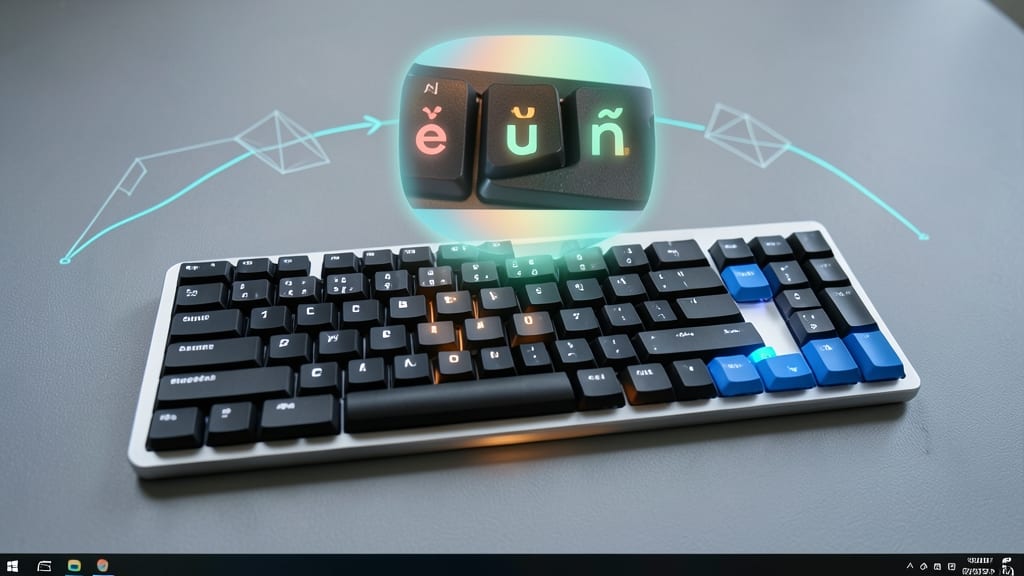
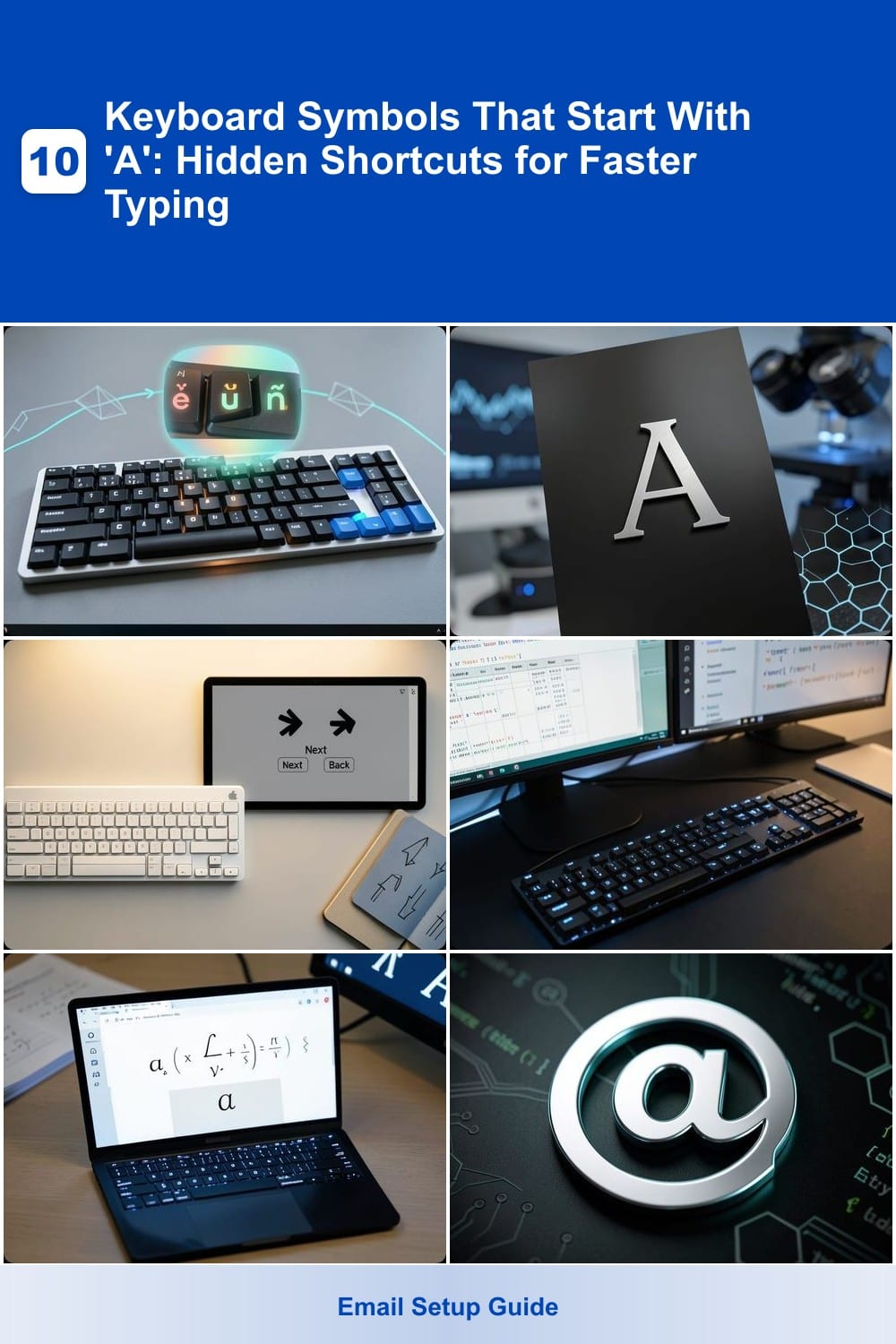
Struggling to type é, ü, or ñ without switching keyboards? Alt codes unlock instant access to 150+ accented characters—no language packs required. Simply hold Alt, type the numeric code (e.g., Alt + 0233 for é), then release to insert the symbol seamlessly.
This trick works across Windows and Linux (Mac users can use Option + letter combos). Master these codes to type Spanish, French, or German without breaking your workflow—ideal for multilingual documents or language learners. For example, Alt + 0220 gives you à, while Alt + 0241 produces ñ.
Perfect for students, writers, or professionals handling multilingual content, this method saves time and eliminates the need for keyboard switches. ⚡
Angstrom Symbol for Technical Writing

If you’ve ever drafted a scientific paper or worked with atomic-scale measurements, the angstrom symbol (Å) is your secret weapon. This tiny but mighty character represents 10^-10 meters—the perfect unit for describing wavelengths, crystal structures, or molecular distances in physics and chemistry.
Typing it is simple: On Windows, hold Alt and type 0210 on the numpad, then release. On Mac, use Option+Shift+A. The symbol appears in fonts like Arial Unicode MS or Times New Roman, ensuring compatibility across lab reports, engineering specs, and academic journals.
For researchers, engineers, and STEM students, mastering this symbol saves time and ensures precision in technical writing. No more fumbling with subscripts—just type Å and let the science speak for itself. ✨
Arrow Symbols for Presentations

Tired of bulky text arrows cluttering your slides? The arrow symbols (← → ↑ ↓) are your secret weapon for sleek, modern presentations—no extra fonts required.
Simply copy-paste these Unicode symbols into PowerPoint or Google Slides to replace directional text like "Next" or "Back." They’re scalable, crisp at any size, and work across all fonts. For diagonal arrows, try ↗ ↘ ↙ ↖—perfect for flowcharts or process diagrams. Best of all, they’re built into every system, so no installation needed.
Presenters, trainers, and marketers will love how these symbols instantly elevate visuals while keeping files lightweight. Give your next deck that polished, tech-savvy edge! ✨
Asterisk and Ampersand Shortcuts

The **asterisk (*) and ampersand (&) aren’t just punctuation—they’re power tools for coders and data analysts. In Markdown**, text creates italics while text makes bold, and lists generate bullet points effortlessly. Meanwhile, in LaTeX, & aligns columns in tables, and denotes footnotes or optional arguments in commands.
Excel users can leverage these symbols too: =SUM(A1:A10)*1.1 multiplies a range by 11%, while =IF(A1>100, "Pass", "&Fail") combines text with logic. The ampersand also acts as a bitwise AND operator in Python (a & b) and a logical AND in SQL (WHERE A > 10 AND B < 20).
Mastering these shortcuts cuts down on manual formatting and speeds up workflows—perfect for developers, data scientists, or anyone tired of typing redundant commands. ⚡
Alpha Symbol for Mathematical Documents
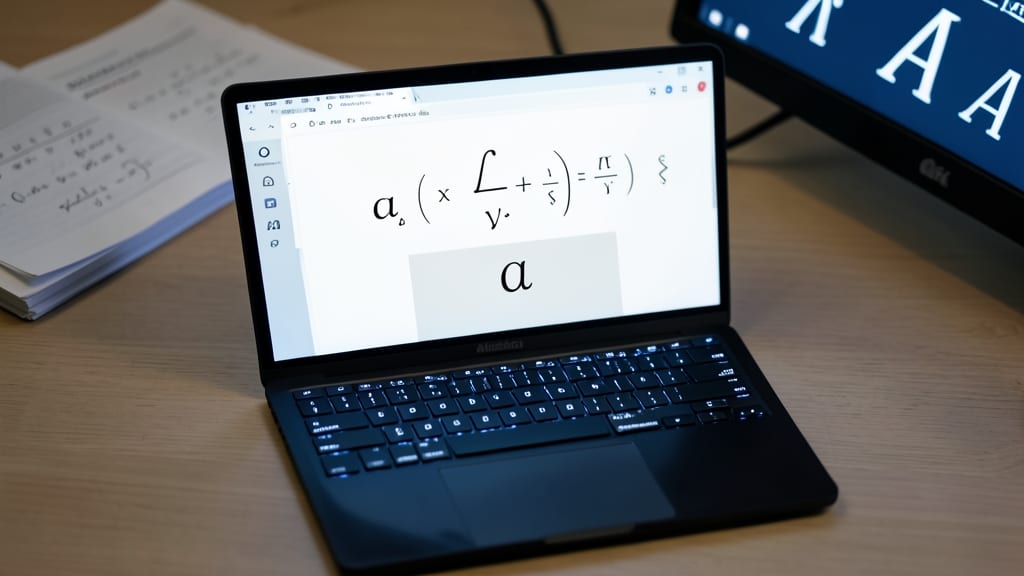
Need to type the alpha symbol (α) for equations or research papers? This Greek letter is a staple in math, statistics, and physics—but you don’t need a special font or plugin to use it. Windows and Linux systems let you type it directly with built-in keyboard shortcuts, saving time and headaches.
On Windows, hold Alt and type 0224 on the numeric keypad, then release Alt. On Linux, use Compose + a (if your system has the Compose key enabled) or Ctrl+Shift+U, then type 03B1 and hit Enter. These methods work in LaTeX, Word, and even plaintext editors like VS Code, making it perfect for students and professionals.
Engineers, data scientists, and academics will appreciate how this symbol streamlines documentation—no more hunting for fonts or copying from images. Just type it natively and focus on your work. ✨
At Symbol for Email and Coding

The @ symbol might look simple, but it’s the backbone of modern communication—and way more powerful than just email addresses. Beyond separating usernames from domains, it’s a critical operator in programming, databases, and even scripting languages.
In Python, the @ symbol marks decorators that modify functions (like @staticmethod). In C++, it creates namespaces to organize code (namespace mylib @). And in SQL, it’s the key operator for joining tables (SELECT * FROM users @ JOIN orders). Typing it once unlocks shortcuts across these tools—no need to memorize separate commands.
Developers, data analysts, and sysadmins rely on it daily for cleaner code and faster queries. Mastering this one symbol can streamline your workflow in multiple languages. ⚡
Alveolar Symbol for Linguistics
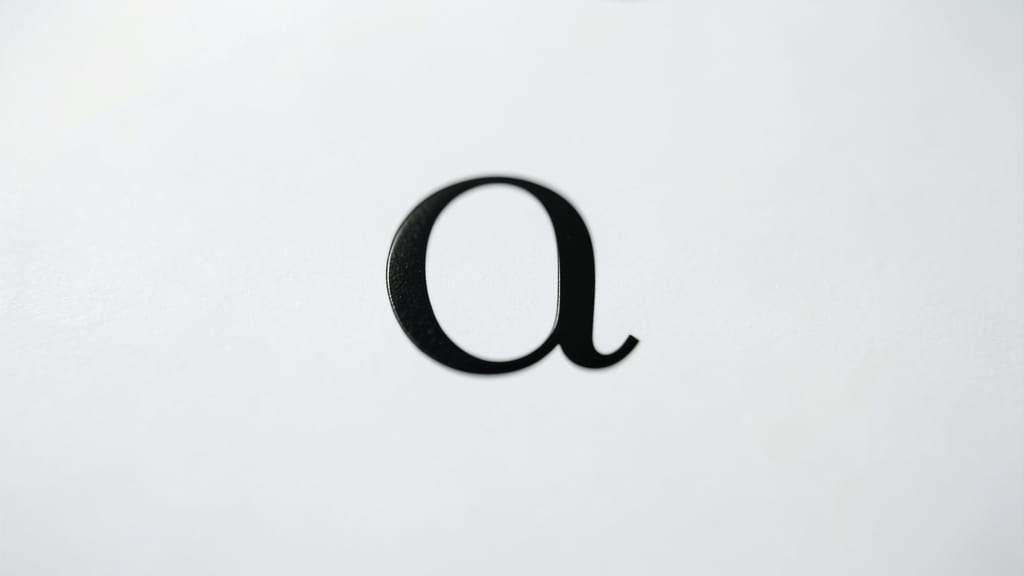
If you’ve ever transcribed speech, studied linguistics, or worked in speech pathology, you’ve likely encountered the alveolar symbol (ɑ)—the closed vowel sound in words like "father" or "car." This Unicode character (U+0251) is a cornerstone of the International Phonetic Alphabet (IPA), used globally to standardize pronunciation in research, textbooks, and clinical notes.
Typing it is simple: on Windows, press Alt + 0593 (NumPad), while macOS users can use Option + Shift + A. In LaTeX, \textsc{a} or \textipa{a} renders it seamlessly. What makes this symbol unique is its precision—unlike generic "a," the ɑ distinguishes between vowel types (e.g., "cat" vs. "father"), making it indispensable for linguists analyzing dialects or speech therapists documenting patient progress.
For professionals in phonetics, speech therapy, or language documentation, mastering this symbol isn’t just useful—it’s a requirement. Whether you’re annotating audio recordings or drafting academic papers, the ɑ ensures clarity and consistency in your work. ✨
Angle Bracket for HTML and Coding

If you’ve ever written a single line of HTML or C++, you’ve already used these two tiny symbols more than you realize. The angle brackets (< >) aren’t just punctuation—they’re the invisible scaffolding holding together web pages, data formats, and even programming logic.
In HTML, they define tags like `
`, while in XML, they structure data hierarchically. In C++, they enable template syntax (<type>) and STL containers. Their versatility extends to XPath queries, JSON-like formats, and even LaTeX math mode for equations. Typing them directly is faster than hunting for obscure shortcuts.
Web developers, data engineers, and programmers will find these symbols indispensable for writing clean, structured code. Mastering them cuts down on syntax errors and speeds up workflows—no plugins or extensions needed. ✨
Apostrophe and Quotation Marks

Tired of inconsistent punctuation ruining your professional documents? The apostrophe (‘ ’) and quotation marks (“ ”) are the unsung heroes of polished typography, transforming casual text into crisp, authoritative communication.
Use straight apostrophes (') for contractions and possessives (e.g., don’t, Smith’s), while curly apostrophes (‘ ’) maintain elegant spacing in design layouts. For quotes, smart quotes (“ ”) replace plain quotes (" ") to avoid awkward spacing in legal contracts or social media posts. Most word processors auto-convert them when typing in “smart quote” mode—just enable it in settings.
Journalists, lawyers, and content creators swear by these for brand consistency. Even coders use them in Markdown** for code blocks and citations. Mastering them elevates every document from amateur to professional. ✨
Arrowhead Symbols for Flowcharts

Flowcharts and UML diagrams don’t need to rely on clunky text labels—arrowhead symbols (↗ ↘ ↙ ↖) instantly clarify direction and relationships. These four Unicode characters (U+2197 to U+2199) are the secret weapon for designers, engineers, and project managers crafting clear visual workflows.
Each arrowhead represents a distinct directional flow: top-right (↗), bottom-right (↘), bottom-left (↙), and top-left (↖). They’re natively supported in Microsoft Visio, Lucidchart, and even plain text documents, eliminating the need for external icons. Pair them with connection lines to create professional-grade diagrams without design software.
Perfect for software architects, business analysts, and educators, these symbols save time while ensuring universal readability. ⚡